A shopper in Pune opens ChatGPT and asks, “What’s the best natural hair oil for frizzy hair in India?” ChatGPT suggests three brands, gives a short explanation for each, and shares a link for more information. Your brand has cleaner ingredients, better reviews, and a more effective formulation. Yet, it does not appear in the recommendations. Three months later, 50,000 other shoppers have asked similar questions, and your brand is still missing from the results.
This is the challenge Indian D2C brands are starting to face in 2026. It is not limited to one industry either. Skincare, supplements, home goods, fashion, food, pet care, and other categories are already seeing customers turn to AI tools when researching what to buy.
LLMO (Large Language Model Optimization) helps platforms such as ChatGPT, Gemini, Perplexity, and Copilot understand your brand, describe it accurately, and consider it when customers ask relevant questions. For D2C brands, this is quickly becoming an important part of customer acquisition, but very few Indian brands have started building a strategy around it.
| $108.76BIndia D2C market size in 2026Mordor Intelligence, Jan 2026 | 10,000+Active D2C brands selling online in IndiaSaasultra, Mar 2026 | 80%Consumers plan to use GenAI for shopping in 2026PartnerCentric, Dec 2025 | +693%AI-referred retail traffic growth — Holiday 2025Adobe Digital Insights |
1. The AI Shopping Revolution Nobody Warned Indian D2C Brands About
Something has changed in how Indian consumers discover products. It started quietly, but the shift has become hard to ignore.
Shopping queries on ChatGPT increased from 7.8% to 9.8% of all searches in the first half of 2025. That represents a 25% increase in the category, on top of a 70% overall rise in ChatGPT usage (Bain & Company / Sensor Tower, 2025). In simple terms, shopping queries on ChatGPT nearly doubled within six months.
And the shift continued. Adobe Analytics tracked more than one trillion visits to retail sites across 2025 and 2026, revealing a trend that could significantly change how D2C brands approach customer acquisition.
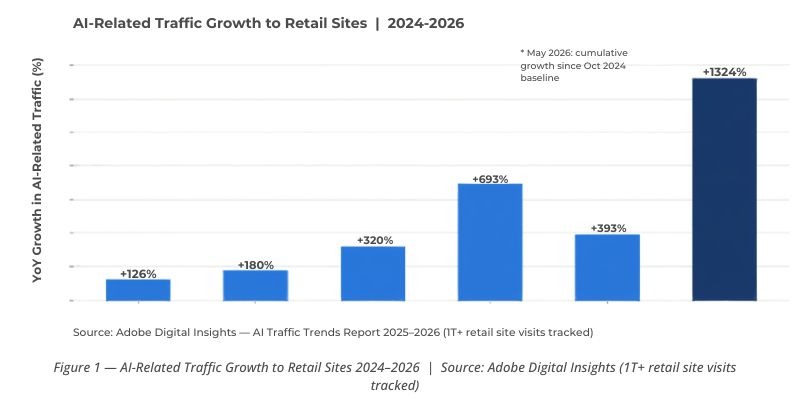
By May 2026, AI-referred traffic to retail sites had grown 1,324% since Adobe began tracking it in October 2024 (Adobe, June 2026). That is not a niche channel any more. That is a structural shift in how discovery works.
| Key Data: On Amazon Prime Day 2025, traffic coming from AI shopping assistants increased by 3,300%. During Black Friday 2025, GenAI traffic to retail websites was up 805% year over year. These numbers are more than short-term spikes. They point to a lasting change in how people discover and research products (Capital One Shopping Research, 2026). |
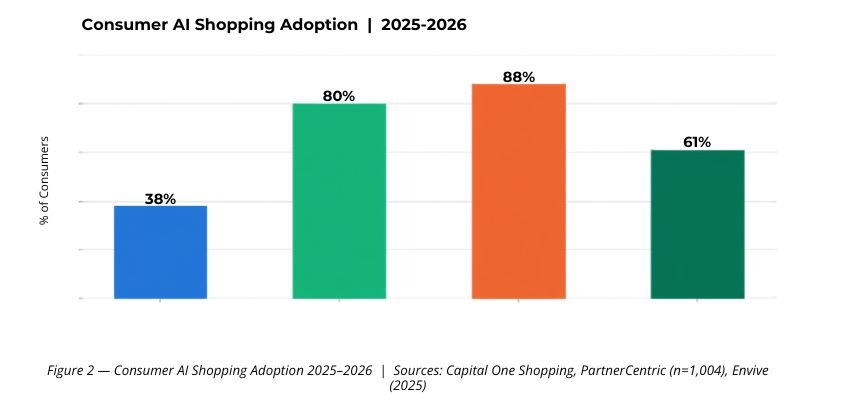
The consumer side of this shift is just as clear. Around 80% of global consumers plan to use generative AI for shopping in 2026, while 88% used AI at some point during the 2025 holiday season. Among Gen Z, one of the key age groups driving D2C growth in India, 61% used AI for purchases in the past year, and 33% now prefer AI platforms over search engines when researching products.
For Indian D2C brands targeting 18-to 35-year-olds, the audience is already changing how it discovers and researches products. The real question is whether your brand is keeping up.
2. Why AI-Referred Shoppers Are the Best Customers You’re Not Getting
Before getting into how brands can get recommended by AI, it is important to understand why this matters beyond the traffic numbers.
AI-referred shoppers are not simply browsing. They have already researched the product through an AI platform, received a recommendation, and chosen to learn more. By the time they reach your product page, they are already familiar with the product and much closer to purchasing than the average organic visitor.
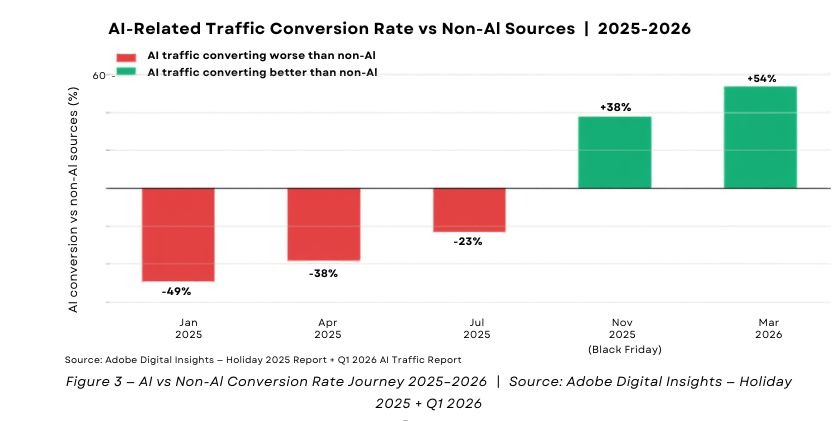
The Adobe data shows how quickly this has changed. In January 2025, AI-referred traffic converted 49% worse than traffic from non-AI sources. By Black Friday 2025, it was converting 38% better. By March 2026, the gap had widened to 54% better, setting a new record and marking an 80-percentage-point swing in just twelve months.
The difference is not limited to conversions. AI-referred shoppers also show stronger engagement. They spend 45% more time on a site, view 13% more pages per visit, and are 33% less likely to leave immediately. Revenue per visit from AI-referred traffic also increased by 254% year over year in the holiday data.
| “Shoppers arriving from AI assistants aren’t just landing and leaving. They’re spending 45% more time on-site and viewing 13% more pages per visit, signaling higher intent and stronger alignment with what they’re looking for.”— Vivek Pandya, Lead Analyst, Adobe Digital Insights ( January 2026 ) |
| What this means for D2C brands: A visitor who arrives from a ChatGPT recommendation is not the same as a visitor from a Google search. They have done their research, been pre-sold by an AI they trust, and arrived with genuine purchase intent. For a D2C brand managing CAC carefully, this is the highest-quality traffic channel available in 2026. |
3. Which D2C Categories Benefit Most from AI Recommendations
Not every product category benefits from AI recommendations in the same way. Euromonitor International’s March 2026 analysis of generative AI referrals across product categories shows a clear pattern, with some categories seeing much stronger referral activity than others. This has direct implications for how much attention your brand should give to LLMO.
Beauty and personal care leads the way, followed by consumer health. Both categories have strong online adoption and involve purchases where consumers often want guidance before making a decision. These are also some of the categories where Indian D2C brands have grown rapidly, including skincare, haircare, supplements, wellness, and personal hygiene.
Euromonitor’s findings also highlight an important difference between categories. Pet care products have a high online share but relatively low GenAI referral strength. This suggests that AI recommendations are particularly valuable for products where the buying decision is more personal, complex, or requires more research. Fashion sits somewhere in the middle, while home and living continues to grow and food and beverage is starting to gain traction.
| “As generative AI platforms gain traction, retailers and brands must optimise for a new reality: the AI-influenced shopping experience. To remain visible and relevant, go-to-market strategies must evolve to reach not only consumers but the bots influencing purchase decisions.”— Michelle Evans, Global Lead for Retail & Digital Shopper Insights, Euromonitor International ( March 2026 ) |
4. What LLMO for D2C Actually Means, in Plain Terms
LLMO for a D2C brand is not a one-time campaign or another SEO fix that you implement and forget about. It is an ongoing process of helping AI models:
- Understand that your brand exists, what you sell, and what sets you apart
- Describe your products accurately, including ingredients, certifications, pricing range, and use cases
- Build enough trust in your brand to recommend it, rather than simply mentioning it
- Recommend your brand by name when a shopper asks a question that your product can solve
There are two layers to this:
| Layer | What It Is | Time to Impact | D2C Priority |
| Training Data (Parametric Memory) | What AI models already know about your brand. This information is built into the models during training from sources such as Wikipedia, Reddit, press coverage, and other open-web content. | 6–12 months | High for established brands |
| Live Retrieval (RAG) | What AI models find across the live web before generating a response, including your website content, reviews, and third-party mentions. | 3–10 days | Highest priority. Fix this first. |
For most Indian D2C brands, the RAG layer is the fastest win. If your product pages are structured clearly, your AI crawlers are not blocked, and your brand has structured review content and FAQ answers in the right places, you can start appearing in AI recommendations within days.
5. India D2C Market Context: The Opportunity Is Larger Than It Appears
The India D2C e-commerce market was valued at $87.5 billion in 2025 and is expected to grow from $108.76 billion in 2026 to $322.1 billion by 2031, at a CAGR of 24.3% (Mordor Intelligence, January 2026). More than 10,000 active D2C brands are selling primarily through online channels in India as of 2026, with over 800 brands already generating ₹100 crore or more in annual revenue.
Mobile commerce accounts for 82% of all e-commerce transactions in India, while 62% of new online shoppers come from tier-2 and tier-3 cities. These consumers are also adopting AI tools, including ChatGPT, at a similar pace to shoppers in major cities.
For LLMO, this means the audience influenced by AI is much broader than a small group of tech-savvy urban consumers. AI is becoming part of the wider Indian D2C shopping journey, and brands that start appearing in AI recommendations early could gain a meaningful customer acquisition advantage over competitors that wait.
6. The 7 LLMO Tactics That Get D2C Brands Recommended by AI
These are the most practical LLMO tactics that can influence whether AI platforms recommend your products, ranked from the fastest wins to longer-term efforts.
Tactic 1: Unblock AI Crawlers in robots.txt
Day 1
Make sure AI crawlers can access your product, collection, and blog pages. Check for incorrect Disallow rules affecting GPTBot, OAI-SearchBot, PerplexityBot, ClaudeBot, and Google-Extended. Fixing these access issues can help AI platforms discover your content.
Tactic 2: Make Product Pages Easy for AI to Understand
Week 1
Your product pages should clearly explain what the product is, who it is for, and what makes it different. Add:
- A short, factual product description
- Ingredients, certifications, quantity, and usage details
- 5 to 8 customer-focused FAQs
- Product, Review, AggregateRating, and Offer schema
Tactic 3: Build Your Brand Presence Across the Web
Week 2
AI platforms look beyond your website when evaluating a brand. Strengthen your presence across Google Business Profile, Wikidata, LinkedIn, Crunchbase, and relevant marketplaces such as Amazon, Nykaa, and Flipkart.
Keep your brand name, founding year, categories, and description consistent everywhere.
Tactic 4: Create Content Around Real Customer Questions
Week 2 to 3
Create useful guides and FAQs based on questions customers actually ask. Use customer support queries, marketplace Q&As, and reviews to identify topics. Add original insights, expert opinions, or data where possible.
Comparison and “best of” content can be particularly useful for categories where shoppers need guidance.
Tactic 5: Add an llms.txt File
Week 2
Create an llms.txt file that points AI systems toward your most important pages, including your brand story, product collections, FAQs, guides, and original research.
Tactic 6: Build Genuine Third-Party Mentions
Month 2
Strengthen your presence through genuine reviews and mentions on platforms such as Amazon, Nykaa, Flipkart, Reddit, YouTube, and relevant publications. Focus on earning these mentions rather than manufacturing them.
Tactic 7: Create Content for AI Shopping Queries
Month 2 to 3
Focus on commercial questions such as “best sulphate-free shampoo for oily scalp in India” or “best home decor brand for minimalist interiors.”
Create clear answers to these questions through product pages, blog posts, FAQs, and buyer guides so AI platforms can understand and reference your brand.
7. Category-Specific LLMO Playbook for Indian D2C
Different D2C categories require different LLMO emphases based on how consumers search and how AI models evaluate product credibility in that space.
| Category | Top AI Query Types | Key Credibility Signals for AI | Priority Tactic |
|---|---|---|---|
| Beauty &Skincare | “Best [product] for Indian skin”, “Safe ingredients for [concern]” | Dermatologist endorsements, ingredient lists, COSMOS / Ecocert certification | Expert FAQ content + ingredient schema |
| Health &Supplements | “Best [supplement] for [goal] in India”, “FSSAI approved protein powder” | FSSAI certification, nutritionist quotes, clinical study references | Original research + expert authority markup |
| Fashion &Apparel | “Sustainable D2C brands India”, “Best [type] brand for [style]” | Sustainability certifications, fabric sourcing transparency, sizing inclusivity | Brand story content + listicle positioning |
| Food &Beverage | “Clean label [product] India”, “No preservatives [product category]” | Ingredient transparency, FSSAI number prominent, founder story | Ingredient education content + review signals |
| Home &Living | “Best [product] for Indian homes”, “Handmade / artisan [product] India” | Craft story, material sourcing, artisan partnerships | Storytelling content + origin markup |
8. The LLMO Mistakes Costing Indian D2C Brands AI Visibility
1. Product pages written only for conversion, not understanding. Lifestyle photos and emotional copy may work for shoppers, but they do not give AI models enough factual information to confidently recommend your product. Add a clear, plain-language description before the marketing copy.
2. No FAQs on product or collection pages. When a shopper asks ChatGPT a question your product can answer, AI needs to find a clear answer on your site. If you do not provide one, a competitor might.
3. Reviews limited to your own website. Reviews on your Shopify store may be less accessible to AI crawlers than reviews on platforms such as Amazon, Nykaa, or Flipkart. Build your review presence across relevant third-party platforms.
4. Missing Product, AggregateRating, and Organization schema. Structured data helps AI systems understand your products and assess their credibility. Without it, important product information can be harder to interpret.
5. No original expert content. Generic product descriptions rarely give AI systems a reason to choose your brand. Content created by a named in-house dermatologist, nutritionist, or product formulator can provide stronger expertise and credibility.
6. Treating LLMO as an SEO team’s responsibility alone. For D2C brands, LLMO involves content, product, development, and community teams. It works best as a shared strategy rather than another task added to SEO.
9. Your 30-Day LLMO Action Plan for Indian D2C Brands
This plan is designed for a lean D2C team with a founder, a content person, and a developer. You do not need an agency to get started. You just need to start.
Day 1 to 2: Run an AI brand audit. Search your brand name and top 3 products in ChatGPT, Gemini, and Perplexity. Save the responses and note anything that is missing, incorrect, or outdated. This gives you a clear starting point.
Day 1 to 2: Audit robots.txt. Check for rules blocking GPTBot, ClaudeBot, PerplexityBot, OAI-SearchBot, or Google-Extended. Remove any unnecessary blocks.
Day 3 to 5: Audit your schema. Test your homepage, top 3 collection pages, and top 5 product pages using Google’s Rich Results Test. Note any missing or incorrect schema.
Week 1: Add Product and AggregateRating schema. Include key details such as product name, description, brand, offers, and ratings on your product pages.
Week 1: Rewrite your top 5 product page introductions. Add a short, plain-language description before the marketing copy. Clearly explain what the product is, who it is for, and what makes it different.
Week 2: Add FAQs. Add 5 to 8 useful FAQs to your top 10 pages. Write them in the same way customers would naturally ask them.
Week 2: Publish your llms.txt file. Include your most useful pages, such as your homepage, key collections, expert content, and buyer guides, with short descriptions.
Week 2: Create or claim your Wikidata entity. Make sure your brand name, website, founding date, and product category are accurate.
Week 3: Publish original expert content. Create one detailed guide, such as “How to choose the right [product] for Indian skin, diet, or home.” Use a real expert’s name rather than an anonymous team byline.
Week 4: Strengthen your review presence. Build genuine reviews on Amazon India, Nykaa, or the most relevant indexed marketplace for your category. Focus on collecting authentic customer feedback rather than simply hitting a specific review count.
What They Changed in 30 Days
1. Fixed robots.txt and unblocked all major AI crawlers.
2. Added ingredient specifications and a plain-language description to every product page.
3. Added FAQ sections to all 12 product pages with FAQPage schema.
4. Created a Wikidata entity with complete and accurate brand information.
5. Published a 1,800-word expert guide, “How to Choose a Shampoo for Indian Hair,” written by their in-house cosmetic chemist.
6. Launched an Amazon Brand Store and actively encouraged genuine post-purchase reviews.
What Happened
- Within 8 days of fixing robots.txt, Perplexity started citing their ingredient guide.
- By week 6, the brand appeared in ChatGPT’s response to “best sulphate-free shampoo for Indian hair,” ranking third among the recommendations.
- Branded search volume in Google Search Console increased by 34% over the following 10 weeks.
- CAC from new customer acquisitions fell by 18% as higher-intent AI-referred traffic began converting at 2.3× the rate of Instagram traffic.
| Lesson: The LLMO gap for this brand was not a product or brand awareness problem. It was mainly a technical accessibility and content structure issue. The team fixed these issues within 30 days, investing around 40 hours of team time and no additional ad spend. |
Frequently Asked Questions
Q: What is LLMO for D2C brands?
LLMO (Large Language Model Optimization) for D2C brands is the process by which your products and brand are made visible, accurate, and recommended by AI platforms like ChatGPT, Gemini, Perplexity, and Microsoft Copilot. This involves structuring product content, creating brand identity signals, and creating original expert content that AI models trust so much that they cite it when shoppers ask for product recommendations.
Q: How do I get ChatGPT to recommend my products?
Three things matter most. First, make sure your site is accessible to GPTBot by checking your robots.txt file. Second, update your product pages with a clear, factual description and a structured FAQ section supported by schema markup. Third, build genuine third-party mentions on indexed platforms such as Amazon, Nykaa, and relevant Reddit communities.
ChatGPT uses live web retrieval for shopping queries, so both the content on your website and the information available about your brand elsewhere can influence its recommendations.
Q: Does LLMO work for small D2C brands with limited budgets?
Yes. Most foundational LLMO work, such as fixing robots.txt, adding schema, publishing llms.txt, and improving product pages, mainly requires time rather than a large budget. A lean two-person team can complete the basics in around 40 hours, with benefits that continue beyond the initial work.
Q: Which D2C categories benefit most from LLMO in India?
Beauty and personal care, consumer health, and supplements tend to benefit most because shoppers often use AI for research and comparisons. Fashion, home and living, and food and beverage also benefit. Overall, high-consideration categories usually see the fastest impact.
Q: How long does it take to see LLMO results for a D2C brand?
Technical fixes such as unblocking AI crawlers, adding Product schema, and publishing llms.txt can show results within 3 to 10 days. Content improvements such as FAQs and expert guides typically take 4 to 8 weeks, while third-party mentions and editorial coverage can take 3 to 6 months to build momentum.
Q: Do I need schema markup on Shopify?
Yes. Shopify provides basic Product schema, but it may not include everything you need. AggregateRating, FAQPage, and Organization schema often require additional setup. Complete schema helps AI systems understand your products, reviews, and brand information.
Q: How important are Amazon and Nykaa reviews for LLMO?
Very important. AI models use third-party sources to assess brand credibility and product quality. Strong reviews on platforms like Amazon and Nykaa can provide valuable external signals beyond reviews on your own website.
Q: Is LLMO the same as SEO for D2C brands?
Not exactly. LLMO builds on SEO fundamentals but focuses on how AI platforms understand and recommend your brand. SEO helps you rank in search results, while LLMO helps influence what AI says when shoppers ask for recommendations. Both work together.
Q: Should Indian D2C brands prioritize LLMO over paid ads?
It is not an either-or choice. Paid ads can drive immediate traffic, while LLMO focuses on building signals that can continue to create value over time. Most D2C brands can benefit from using both.
Q: What is the first LLMO action a D2C brand should take?
Start with a robots.txt audit. Check whether GPTBot, ClaudeBot, PerplexityBot, and Google-Extended can access your site. Then review your top five product pages for a clear product description, FAQPage schema, and Product schema. These two audits give you a practical starting point.
Conclusion
The shopper in Pune who asked ChatGPT about hair oil will probably ask again next month. So will thousands of other shoppers. And six months from now, the brands appearing in those answers may not be the ones with the biggest ad budgets. They will be the ones that started paying attention to LLMO early.
India’s D2C market is projected to reach $322 billion by 2031. As more consumers use AI to research and discover products, AI is becoming an increasingly important part of the customer journey. Adobe’s data also shows that AI-referred traffic is converting 54% better than non-AI sources and generating 254% higher revenue per visit.
The seven tactics in this guide, from unblocking AI crawlers to creating expert content and building third-party review signals, can be implemented by D2C brands of almost any size. The main investment is time. The bigger risk is waiting until competitors get there first.
Build Your D2C LLMO Strategy with Digilligence
We help Indian D2C brands improve their visibility across AI platforms through LLMO, GEO, and AEO strategies, covering everything from technical audits and content planning to schema implementation.
Want to know what ChatGPT, Gemini, and Perplexity are saying about your brand? We can help you find out.